
Feb 10, 2026
By
uCan-Packaging
Can I Be Allergic to Tin Cans?
Tin cans are currently used in a wide range of different industries and settings, though they’re primarily associated with the food and drinks industry. In fact, they’re one of the most common forms of packaging in the modern world.
When it comes to packaging, more and more companies are ditching plastic in favor of more sustainable alternatives which is why tin cans, cardboard boxes, and aluminum packaging are all becoming more common in the business world.
As effective as metal packaging is, there is a growing concern that some materials may be responsible for allergies. Tin cans and packaging containing nickel are prime examples of this. If you’ve ever used a product that came packaged in a tin can and found yourself experiencing a bad reaction, a metal allergy could be responsible.
Here’s a look at tin allergies and metal allergies in general, and a few more sustainable and healthier alternatives.
What are Tin Cans?
Tin cans, despite their name, are not actually made entirely of tin. In fact, they contain very little tin as they are instead usually made of steel and are coated with a thin layer of tin.
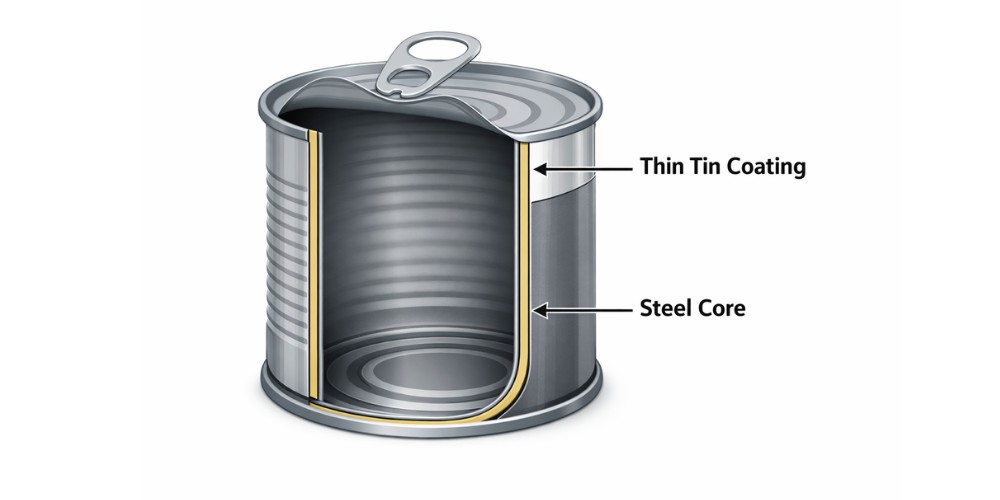
Known as ‘tinplate’, this thin layer of tin is added to the steel cans to help prevent rust, prolong the material, and protect the products housed within. This makes tin cans ideal for the food and drinks industry, though they’re also used in other business sectors too, including health and wellness and pharmaceuticals.
While tin cans are deemed more sustainable and eco-friendly than plastic bottles, some of them feature a plastic coating inside to help protect the can and the contents within. They can still be recycled, though because of their construction and the plastic they contain, they’re not as recyclable as other sustainable packaging materials such as aluminum.
What are Metal Allergies?
As the name implies, metal allergies are a form of skin allergy triggered by an adverse reaction to the skin coming into contact with a certain metal.
There’s a great deal more science to it than what we’re about to look at, but in basic terms, a metal allergy occurs when the body perceives a certain type of metal to be a toxic or harmful substance. When it comes into contact with the skin, or the body in general, this triggers a natural response from the immune system. The immune system believes that the body is under attack and so it sends protective cells known as T-cells to attack the metal ions and attempt to neutralize them.
As the cells attempt to neutralize the metal ions, signals are sent to the lymph nodes telling them to put up more defenses and send more cells. This in turn triggers an inflammatory response which can cause symptoms such as:
- Redness and itchiness of the skin
- Swelling
- Dryness
- Rashes
- Skin sensitivity
- Headaches
- Nausea
- Difficulty breathing
- Blisters
- Raised skin
- Cracked skin
- Inflammation
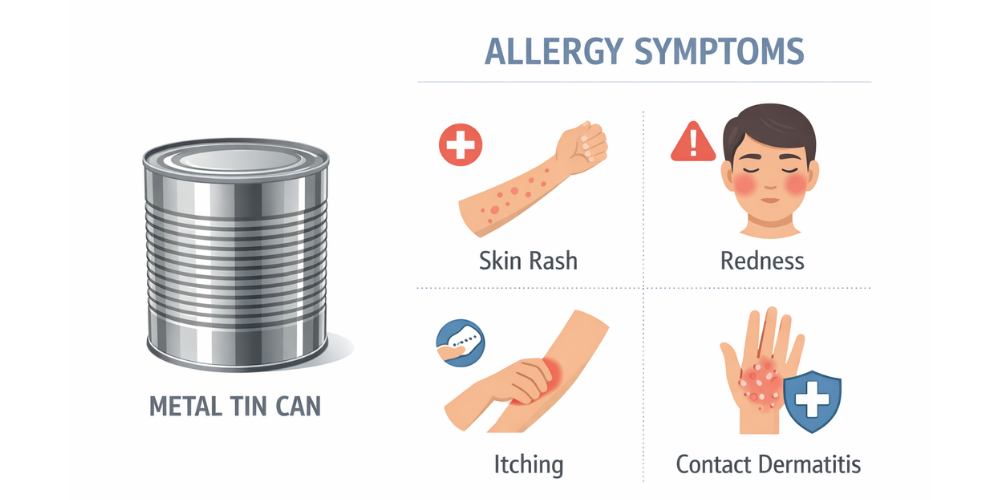
If you suspect a metal allergy, it’s always worth seeking professional medical advice, just to be on the safe side.
Metal allergies are commonly caused by wearing metal jewelry, though in some instances, tin cans can also cause allergic reactions as this not only results in direct contact with the metal, but sometimes metals such as nickel can also leech into the food and/or drink.
While some people can experience allergic reactions when they come into contact with tin cans, it’s likely a different metal in them that’s responsible for these reactions. Tin allergies are possible, though rare. Instead, the metal likely responsible for an allergic reaction is nickel. Nickel is sometimes found in steel to help strengthen the metal and add additional resistance to corrosion.
If the cans containing nickel house acidic foods or drinks, this can lead to the nickel leaching into them, which in turn increases the risk of an allergic reaction when the produce is consumed.
Sustainable Packaging Alternatives to Tin Cans
Needless to say, as tin cans can trigger allergic reactions, especially if they’re made from steel which contains nickel, retailers are looking for more viable, plastic-free packaging alternatives, especially when looking to be more sustainable.
The best way to avoid a nickel allergy is to avoid packaging containing nickel which is why aluminum packaging is becoming increasingly common in industries other than simply food and drink.

Aluminum packaging is very strong and durable, while also being light in weight. It also offers exceptional protective properties against oxygen, moisture, bacteria, sunlight, and plenty more besides. This makes it perfect for preserving products and extending shelf lives.
The true sustainability of aluminum, however, lies in its recyclability. It is one of the world’s most recycled materials and can be recycled an infinite amount of times with no loss of quality. Recycling aluminum also uses 95% LESS energy than producing it from new.
Aluminum allergies, however, are still possible, though the risk of an allergic reaction to aluminum is considerably less than an allergic reaction to tin cans containing nickel.