
May 24, 2026
By
uCan-Packaging
Can you recycle styrofoam? The honest answer in 2026
Summary: Is styrofoam recyclable? Yes in theory, but most curbside programs reject it. Styrofoam (expanded polystyrene or EPS) is 98% air, expensive to transport, and contaminated easily by food. Less than 1% gets recycled in the US. Sustainable alternatives like mushroom packaging and cornstarch containers are spreading fast as cleaner and more recyclable options.
What is styrofoam?
Styrofoam is a trademarked brand name for closed-cell extruded polystyrene foam (XPS), originally associated with Dow and later carried by DuPont for building insulation products.
The white foam commonly used in takeout containers, shipping inserts, and coffee cups is usually expanded polystyrene (EPS), which is made by expanding styrene beads with steam.
Most people use “Styrofoam” as a catch-all for both materials, but technically that is not precise. In practice, when people say “Styrofoam,” they are often referring to EPS packaging foam rather than the branded XPS insulation product.
EPS is mostly air (about 98%) . That structure makes it light, cheap, and a strong insulator. It is also why styrofoam is so hard to recycle.
Where is styrofoam used?
Styrofoam (EPS) is commonly used in food packaging (takeout clamshells, coffee cups, plates), shipping packaging that cushions electronics and appliances, packing peanuts, and loose fill.
Around 16 million metric tons of EPS are produced globally each year, per Green Theory, and the majority is single-use.
Can you recycle styrofoam? Here is the answer
Yes, technically. EPS carries plastic resin code #6 and can be melted and reused. The problem is that less than 1% of EPS in the US gets recycled, according to Earth911 .
Most curbside programs reject it. The Institute for Environmental Research and Education confirms that municipal recycling facilities are not built to handle styrofoam because the equipment used to sort cans, paper, and rigid plastic clogs on light foam.
So is styrofoam recyclable in practice? Yes, but only through specialized programs.
Why styrofoam is so hard to recycle
Three things work against EPS recycling.
- Volume
- Contamination
- No real end markets
A truckload of styrofoam weighs almost nothing because it is mostly air. Transporting it to a recycler costs more than the recycled material is worth.
Food residue, grease, and labels can make EPS harder to recover, and contaminated foam is often rejected even at specialty facilities.
Recycled EPS has fewer applications than recycled PET or aluminum, so there is little economic reason to invest in infrastructure.
Where to recycle styrofoam if you have some
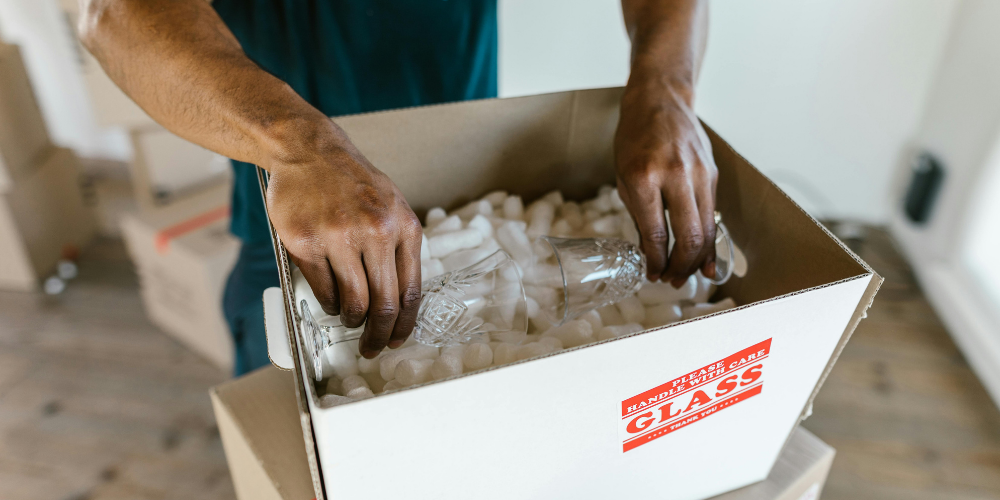
Reuse first. Clean foam blocks make excellent void fill for shipping fragile items, and packing peanuts can be donated to local shipping stores.
After that, clean and dry EPS can still find a home:
- UPS Store and Pack and Ship locations accept clean packing peanuts for reuse
- Earth911's recycling locator finds drop-off sites near you
- TerraCycle sells prepaid Zero Waste Boxes for mail-in EPS recycling
- The EPS Industry Alliance has a useful “Find an EPS Recycler” tool
Strip off all tape and labels first. Break large blocks into manageable pieces. Skip greasy takeout containers; those are typically not accepted in EPS recycling and usually belong in the trash.
The environmental cost of styrofoam
Why does this matter? EPA data shows 80,000 tons of polystyrene containers were generated in the US, and only a tiny fraction were recycled. EPS persists in landfills, breaking down into microplastics that pollute soil and waterways for centuries.
Polystyrene foam fills landfill space well beyond its weight, making it costly for waste systems to handle. Several U.S. states and cities have restrictions on EPS foodware, and California, Oregon, and Washington are among the states with statewide restrictions on certain foam foodservice items.
Burning styrofoam is not a solution either. It releases styrene and other toxic compounds into the air.
Sustainable alternatives to styrofoam
Aluminum
Highly recyclable packaging material with strong collection systems. Useful for cans and containers, though more energy-intensive to produce initially.
Mycelium packaging
Fungi-grown cushioning material made from agricultural waste . Compostable and a promising replacement for protective foam packaging.
Molded pulp
Recycled-fiber packaging shaped into trays and inserts. Widely used for electronics, eggs, produce, and shipping protection.
The takeaway
Can you recycle styrofoam? Yes, but not at home. Drop it at a specialty site, mail it to a company like TerraCycle, or save it for shipping fragile items. Your purchase choices shape what packaging exists in the first place. Picking aluminum, glass, or paper changes industry demand.