
Jul 6, 2026
By
uCan-Packaging
Does aluminum conduct electricity? Learn how it compares to other metals
Summary: Pure electrical-grade aluminum conducts at around 61% of copper's rating on the International Annealed Copper Standard (IACS). It carries the bulk of the world's power transmission grid because it weighs about a third of copper, costs less, and resists corrosion. Silver, copper, and gold conduct better, but aluminum wins where weight and cost matter.
How well does aluminum conduct electricity?
Aluminum is one of the most widely used electrical conductors in the world. Pure electrical-grade aluminum carries roughly 61% the current of copper for the same cross-section. That makes it the fourth most conductive common metal, behind silver, copper, and gold.
So why does aluminum carry the bulk of overhead power lines instead of copper? The answer comes down to physics and price.
How aluminum conductivity compares to other metals
Engineers rank conductors using a scale called the International Annealed Copper Standard, or IACS. The system uses pure copper as the benchmark, set at 100%. Other metals get scored against it.
Here's how the most common conductive metals compare, per Effectrode:
- Silver: 105% (the best conductor known)
- Copper: 100% (the benchmark)
- Gold: about 70%
- Aluminum: 61%
- Brass: 28%
Silver leads the pack, but it costs too much for everyday wiring and tarnishes easily. Gold lasts forever and conducts well, but it's even more expensive. Copper is the standard for most household electrical work because it's reliable, easy to bend, and affordable.
Aluminum sits in fourth place. Still, it beats nearly every other affordable metal by a wide margin. And it has one big advantage that copper, silver, and gold can't match.
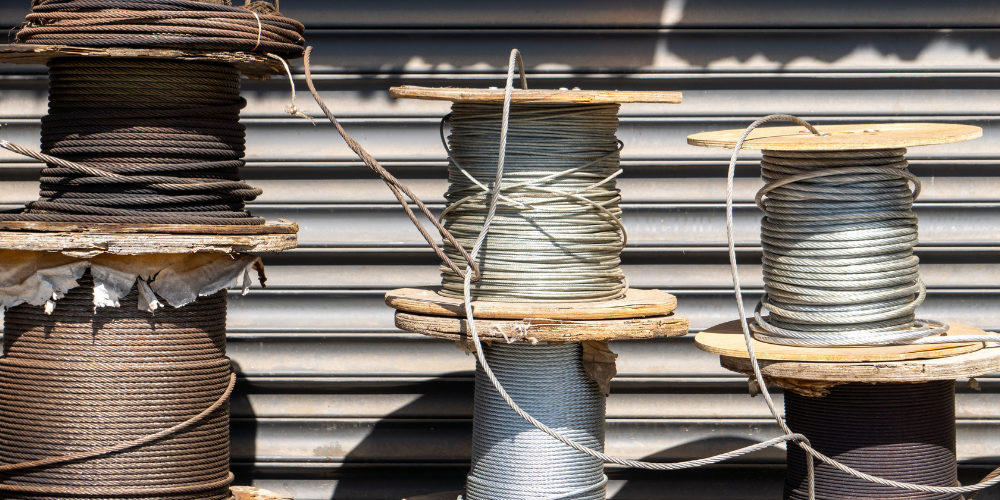
Why aluminum wins on weight
Aluminum weighs about one-third as much as copper. For overhead power lines, that's a huge advantage.
Heavy cables need stronger towers and shorter spans between them. Lighter cables allow utilities to use fewer towers and cover more distance with each tower.
So even though aluminum carries less current than copper, utilities use a slightly thicker aluminum wire to compensate. The same amount of power flows through, with much less weight overall.
That's why more than 80% of high-voltage transmission lines use aluminum-based cables. The most common design wraps aluminum strands around a steel core, called ACSR.
Where aluminum is used as an electrical conductor
Aluminum shows up across the electrical world. A few common examples include:
Power transmission lines
Long-distance high-voltage cables, often as ACSR or all-aluminum conductor (AAC).
Substations and transformers
Aluminum busbars carry heavy current at lower cost than copper equivalents.
Building wiring
Used in service entry cables to bring power into homes and large buildings.
Photovoltaic systems
Aluminum frames and bus bars in solar arrays.
Lithium batteries
Aluminum foil acts as the current collector for the cathode.
Heat sinks and electrical enclosures
Combining conductivity with thermal performance.
Each of these uses takes advantage of enough conductivity for the job, with less weight and lower cost than alternatives.

The aluminum oxide layer: friend and foe
Here's one quirk of aluminum: the moment it touches air, a thin layer of aluminum oxide forms on the surface. That oxide layer is an insulator, which means it blocks electrical current rather than carrying it.
This sounds like a problem, and it can be one if you don't handle it correctly.
Electricians use special connectors, anti-oxidation paste, and aluminum-rated parts that break through the oxide layer and create solid metal-to-metal contact.
The same oxide layer that complicates wiring is also what protects aluminum from rusting. It's why aluminum stays strong outdoors for decades and works so well for everyday products like food and drink packaging.
Why aluminum shows up everywhere
The properties that make aluminum great for power lines, including light weight and corrosion resistance, also make it the top choice for food, drink, and cosmetic packaging. The same metal carrying electricity to your home protects products on the shelf.