
Dec 15, 2025
By
uCan-Packaging
Keywords
Packaging Material
Eco-Friendly Packagingc
Aluminum Packaging
Meta Description: How aluminum packaging material innovations in eco-friendly packaging design help businesses cut waste and meet sustainability goals in 2025.
Eco-Friendly Packaging Design: Aluminum Innovations for Reducing Waste in Businesses
Packaging is one of the most visible parts of a product. It is also one of the biggest sources of waste. Shoppers notice when food or drinks come in single-use plastic, and more of them now expect businesses to choose better options. Aluminum has become a strong alternative.
Aluminum has been used as a packaging material in cans and tins for decades, but design changes are making it more flexible and adaptable. Thin-walled bottles cut down on transport weight. Resealable tins keep products fresh longer. Some companies are moving toward refill systems built entirely from aluminum, which provides customers with durable containers that they can return or reuse.
Unlike plastic, aluminum does not degrade during the recycling process. A bottle or can can go through the process many times and still come out the same quality. That makes it one of the few materials suited for a circular economy model, where packaging is kept in use instead of thrown away.
Lightweight Design and Reduced Waste
Recent advances let manufacturers use less aluminum without weakening the package. A standard 12-ounce drink can today use about 30 percent less metal than it did a few decades ago. That change matters at scale. Shaving even a gram off millions of cans saves tons of material and lowers shipping weight.
Lighter packaging cuts costs for producers and reduces the fuel needed to move products. It also means less metal has to be mined in the first place. Reports from the European Aluminium Association highlight how lightweight design has become a central factor in reducing packaging waste.

Resealable and Reusable Aluminum Packaging
Aluminum packaging is showing up in new forms. Some drinks are sold in screw-top bottles instead of cans. Snack tins with snap lids are being used so people can open and close them multiple times.
In personal care, brands like Dove have introduced refillable aluminum bottles. Customers buy the bottle once and keep it. Refills are sold separately. In parts of Europe, a few stores are testing deposit schemes where aluminum bottles are collected, washed, and put back on shelves.
These eco-friendly packaging uses are early, but they show that aluminum can move past single-use packaging.
Refill and Circular Systems
Aluminum works well in closed-loop programs. A can or bottle can be collected, melted, and turned back into new packaging without losing quality. The turnaround can be as short as two months.
Some companies are pushing this further with refill models. Coffee shops and grocery chains are testing aluminum containers that customers return for refills. The containers are washed and reused instead of being thrown away. Personal care products are starting to follow the same idea with refill stations and mail-back packs. The World Packaging Organization has noted that these refill and return models are an important part of future circular economy systems.
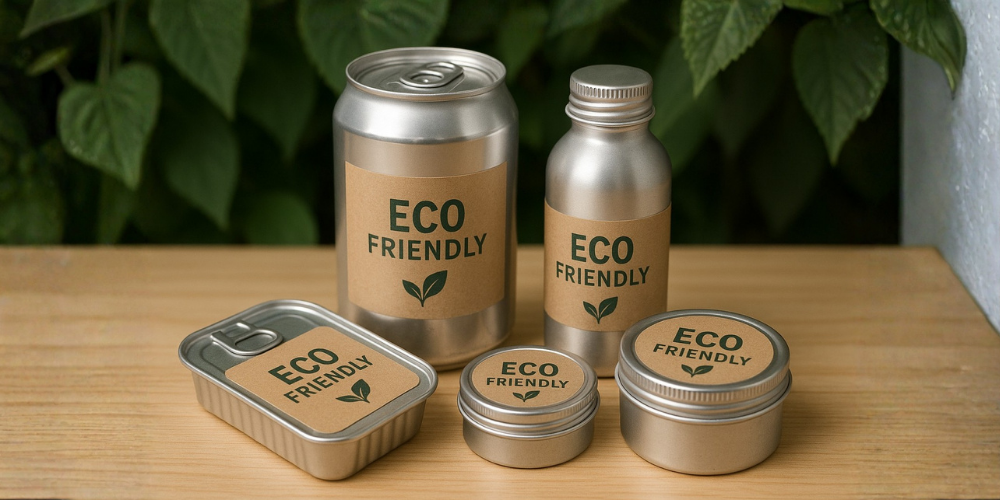
Aluminum Packaging in 2025 and Business Impact
Businesses face tighter rules on packaging waste in 2025. Customers also expect clear action on sustainability. Aluminum answers both pressures. It is already collected on a large scale, can be recycled without loss, and uses far less energy than producing new metal.
For companies, the benefits are practical. Lighter cans and bottles lower shipping costs. Refillable and resealable designs offer brands a way to reduce single-use plastic. Recycled content reduces reliance on raw materials and keeps supply chains steady.
Aluminum will not solve every packaging problem, but it is one of the most reliable tools businesses have right now to reduce waste and show progress.