
Jul 19, 2026
By
uCan-Packaging
Sustainable Packaging Materials That Can Be Recycled Multiple Times – Which Comes Out on Top?
If you run a business, it doesn’t matter which products you provide to your customers, if you require packaging, sustainability is now a basic, yet key, fundamental part of any business strategy.
In recent years, sustainability has become a hugely important topic of discussion for business and organizations of all sizes. Making your business environmentally friendly and more sustainable isn’t just a great way to do your part in tackling climate change, it can also build consumer trust and enhance brand reputation as well. Making your company more eco-friendly shows that you care about the planet. If you care about the planet, you also likely care about your customers. This in turn will help enhance your company image, so it really is a win-win situation.
Of course, for any company looking to make their outfit more environmentally friendly, packaging is often the first port of call. With plastic now being readily replaced, or banned entirely due to the damage it causes to the environment, business owners are focusing on sustainability and recyclability when it comes to their packaging.
Here are some sustainable packaging materials that can be recycled multiple times.
Glass
For organizations looking for a greener, more environmentally friendly alternative to plastic packaging, glass offers a wide range of advantages.
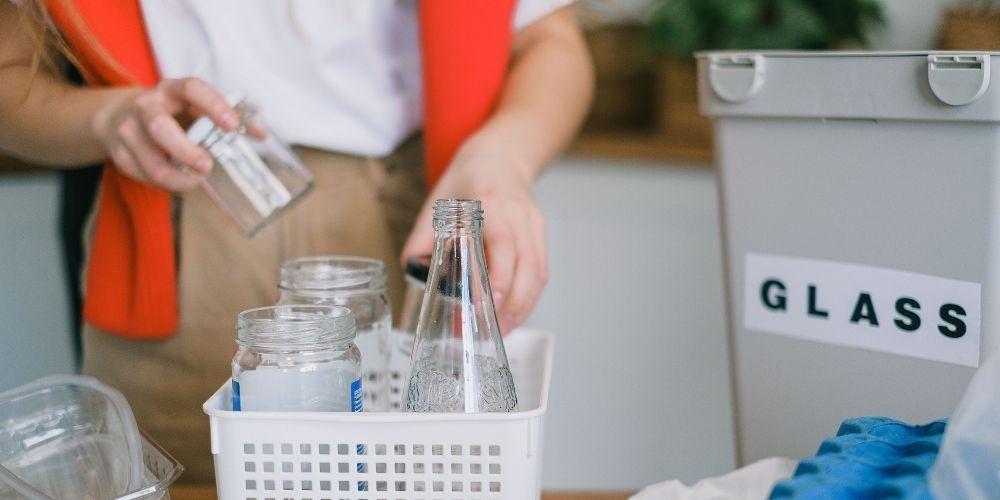
Glass is considerably safer for the environment than plastic, with the added bonus of being infinitely recyclable. That’s right, it can be recycled over and over again with no loss in durability or structural integrity.
As it is natural and non-toxic, this means that it doesn’t leach harmful toxins or contain “forever chemicals” that never truly break down. This makes it a great choice for the food and drinks industry. Glass also has a premium look and finish to it, making it ideal for the beauty and cosmetics industry.
While great for the environment, if broken, glass can pose significant health and safety risks, plus it is heavy in weight. The extra weight means that it has a larger carbon footprint than other lighter materials, so that is certainly worth considering.
Cardboard
Cardboard is another packaging material that is becoming more and more common across multiple industries. Many only retailers and e-commerce companies now use cardboard as their go-to packaging material.
Cardboard is made from recycled materials, which helps to conserve resources, reduces the need for raw materials, and lowers carbon emissions during the recycling and production processes.
Cardboard is also one of the most recyclable materials in existence, making it the perfect packaging material. It should be noted, however, that cardboard is not an infinitely recyclable material. Each time it goes through the recycling process, its fibers become shorter and weaker. Typically, cardboard packaging can be recycled 5 – 7 times.
Corrugated Cardboard
Corrugated cardboard packaging is also becoming a great deal more common across a plethora of different businesses and industries.
Corrugated cardboard is considered to be greener and more sustainable than regular cardboard, as it helps to conserve materials, and is designed to be lighter in weight, and more durable. The basic design features ridges of stronger cardboard sandwiched between different layers of a cardboard sheet.
Corrugated cardboard is also very recyclable, and unlike plastic packaging, it does not contain any harmful chemicals, toxins, or compounds which could prove dangerous for the environment.
Compostable Packaging Peanuts
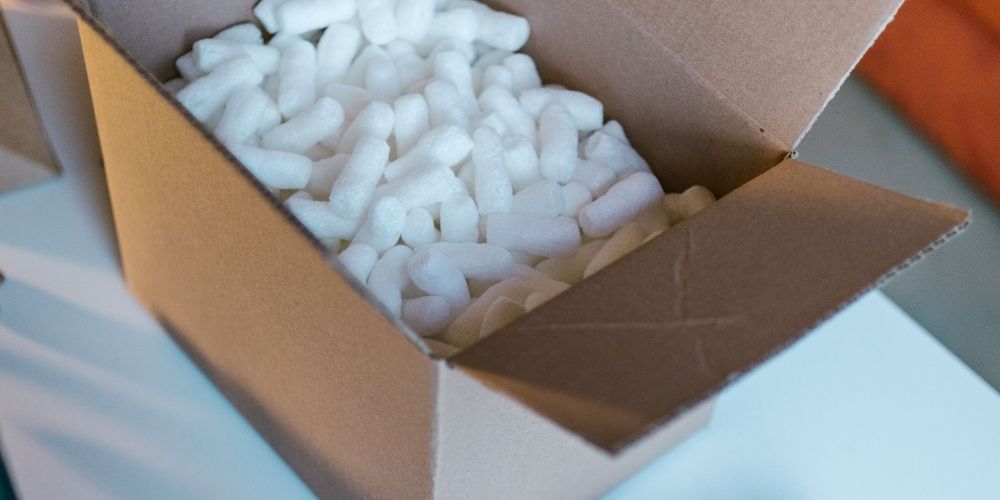
Whereas in the past, packaging peanuts were made from expanded polystyrene, or EPS, many today are now made from biodegradable, compostable materials deemed far safer for the environment.
EPS is a petroleum-based plastic that not only contains hazardous chemicals, but it also has a far greater carbon footprint during its production process. Add to that, the fact that it basically does not break down, and you can see why it’s considered to be so harmful for the environment. Compostable packing peanuts, though are made from natural, compostable ingredients that are much kinder for the planet.
Compostable packing peanuts can be made from a variety of natural materials, including cornstarch, wheat, and other plant-based materials. This means that they are biodegradable and are compostable. Simply throwing them on your compost heap will not only allow them to break down naturally, but it will also help to enrich your compost with nutrients, which will then help to grow new greenery.
Aluminum
For the gold standard of recyclable, sustainable packaging, however, aluminum is considered by many to be the best of the best.
Aluminum packaging is lightweight and durable, which means it has a smaller carbon footprint during transit. It is also free from the harmful chemicals found in plastics, plus it has fantastic preservative properties too.
As far as sustainability goes however, it’s aluminums’ recyclability that really helps it stand head and shoulders above the competition. Aluminum can be recycled indefinitely, with no loss of structural integrity or durability. During the recycling process, it also uses as much as 95% less energy than it would when produced from new.