
Jan 29, 2026
By
uCan-Packaging
The Hidden Dangers of Plastics – 5 Harmful Chemicals Found in Plastic Packaging
In recent years, more and more businesses and industries have been transitioning away from plastic packaging, and instead embracing sustainable, environmentally friendly options as an alternative.
While all manner of businesses and industries have gradually begun distancing themselves from plastic packaging, it’s the food and drinks industry in particular, that has really stepped up its efforts to cut back on its plastic packaging, for a number of reasons.
Plastic packaging not only poses a significant risk to the environment, it also poses a significant risk to human health and wellbeing as well. One of the primary reasons why plastic is deemed to be so dangerous for humans and the environment is the fact that it contains a variety of chemicals, including BPAs and Phthalates, which have been linked with a number of health issues.
To better understand the risks associated with plastic packaging, here’s a look at 5 harmful chemicals found in plastic packaging.
Phthalates
Phthalates are found in virtually all forms of plastic, particularly plastic packaging, and there’s a very good reason for why that is. Phthalates are used as part of the manufacturing process and are added to make the plastic more flexible and pliable.
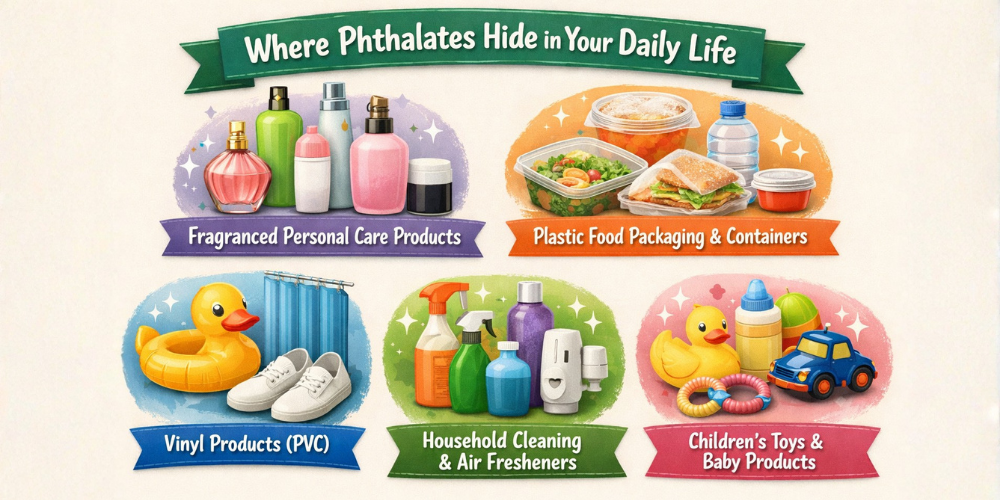
Phthalates have been linked with a number of hormonal imbalances and have been shown to function as endocrine disruptors. They have also been linked with developmental disorders and may impact child growth and development.
BPAs
Bisphenols such as Bisphenol A, or BPA for short, are another chemical widely used in plastic manufacturing. They’re commonly used in food and drink packaging and are found in the linings of certain metal cans.
Like phthalates, BPAs have also been linked with endocrine disruption, along with fertility and reproductive issues.
As if the above wasn’t concerning enough, BPAs have also been linked with impaired cognitive function and may promote mental health disorders.
Dioxins
Unlike the two chemicals listed previously, Dioxins are not used or added to plastic packaging during the manufacturing process. Instead, it is a byproduct created when plastics are incinerated or burned. This is one of the main reasons why recycled plastic is not as eco-friendly as some would have you believe.
Dixons can disrupt hormone function, they can suppress the immune system, they can affect cellular health and function and they have been linked with a plethora of other health issues.
PFAs
PFAs, or, Per- and Polyfluoroalkyl Substances are another chemical widely used in plastic food packaging production. PFAs are known as 'forever chemicals' as they never fully break down or decompose. Because of this, they pose a significant environmental risk as they can accumulate in water and soil, and other living organisms where they will last indefinitely.
PFAs are particularly popular in the fast-food industry as they help to make the packaging grease-proof.
As well as posing significant environmental risks, PFAs may also disrupt human metabolic function, suppress the immune system, suppress thyroid function, and increase the risk of chronic health conditions.
UV Stabilizers
Finally, we have UV stabilizers.
UV stabilizers are chemical additives that are used during the manufacturing process of plastic. These chemicals are added primarily to help strengthen the plastic and protect it from UV damage from the sun.

UV stabilizers help to reflect, absorb, and neutralize ultraviolet radiation from natural sunlight, helping to prevent the plastic packaging from becoming soft, brittle, and discolored.
Again, like so many other chemicals found in plastic and plastic packaging, UV stabilizers may disrupt endocrine function in the human body and knock the body’s natural hormone levels out of sync. In the body, experts believe that they may mimic the effects of estrogen by binding to estrogen receptors. This can affect hormone balance, fertility, cognitive function, mental health, sexual health, and more besides.
Safe and Sustainable Packaging Alternatives to Plastic
As you can see from the above, plastic packaging poses significant risks to not only our planet, but our health in general. Because of this, it’s important that we find safer, healthier, more sustainable alternatives when it comes to food packaging.
While paper, cardboard, and glass packaging are all great alternatives, in recent years we’ve seen a sharp increase in the number of industries using aluminum packaging, particularly for food, drink, and cosmetics.
Aluminum packaging is much safer for both humans and the environment. It is non-toxic, non-reactive, and is free of the harmful chemicals and additives found in plastic packaging. It can also be recycled indefinitely, is cheaper to manufacture and purchase, and uses far less energy during both manufacturing and recycling.
For businesses and industries looking for safer, more sustainable packaging material options, aluminum packaging comes very highly recommended.