
Apr 30, 2026
By
uCan-Packaging
The Sustainable Packaging Showdown – Glass vs. Aluminum
When you consider the fact that each year, we emit roughly 35 billion tons of CO2, you can certainly understand why sustainability is such an important focus for businesses across the globe.
As consumers become increasingly environmentally conscious, particularly about the risks to the environment that plastic poses, companies are looking for ways of being greener and more sustainabe. For many, this involves a significant overhaul of their packaging structure, which in simple terms means switching from plastic packaging to more sustainable materials.
The problem is, there’s a lot of confusion when it comes to sustainable packaging, and as always, there’s a lot of misinformation. For businesses looking to ditch the plastic packaging in favor of more eco-friendly options, one source may claim that glass is the way to go, whereas another will state that aluminum is much better. It can therefore be difficult to know which packaging material to choose.
To help clear things up once and for all, we’re taking a look at the ultimate sustainable packaging showdown as we compare the green credentials of glass and aluminum.
Energy Consumption from New
To begin with, we’re going to look at how much energy is required to produce aluminum packaging from new, and glass bottles from new.
Producing both glass and aluminum from new is a very energy intensive process that requires a great deal of energy, in a variety of different forms. Aluminum for example, is produced in three stages, which all begin with mining. To start with, bauxite ore is mined, which is then refined into alumina, before finally being converted into liquid aluminum.
To produce a ton of aluminum from new, you require roughly 15,000 – 17,000 kWh of electricity. Compare this with glass, and the figure is much less. Glass can vary, though on average, to make glass from new, it requires around 700 – 1600 kWh of electricity to produce a ton of glass. However, of the energy required to produce glass from new, 75% of this comes from natural gas.
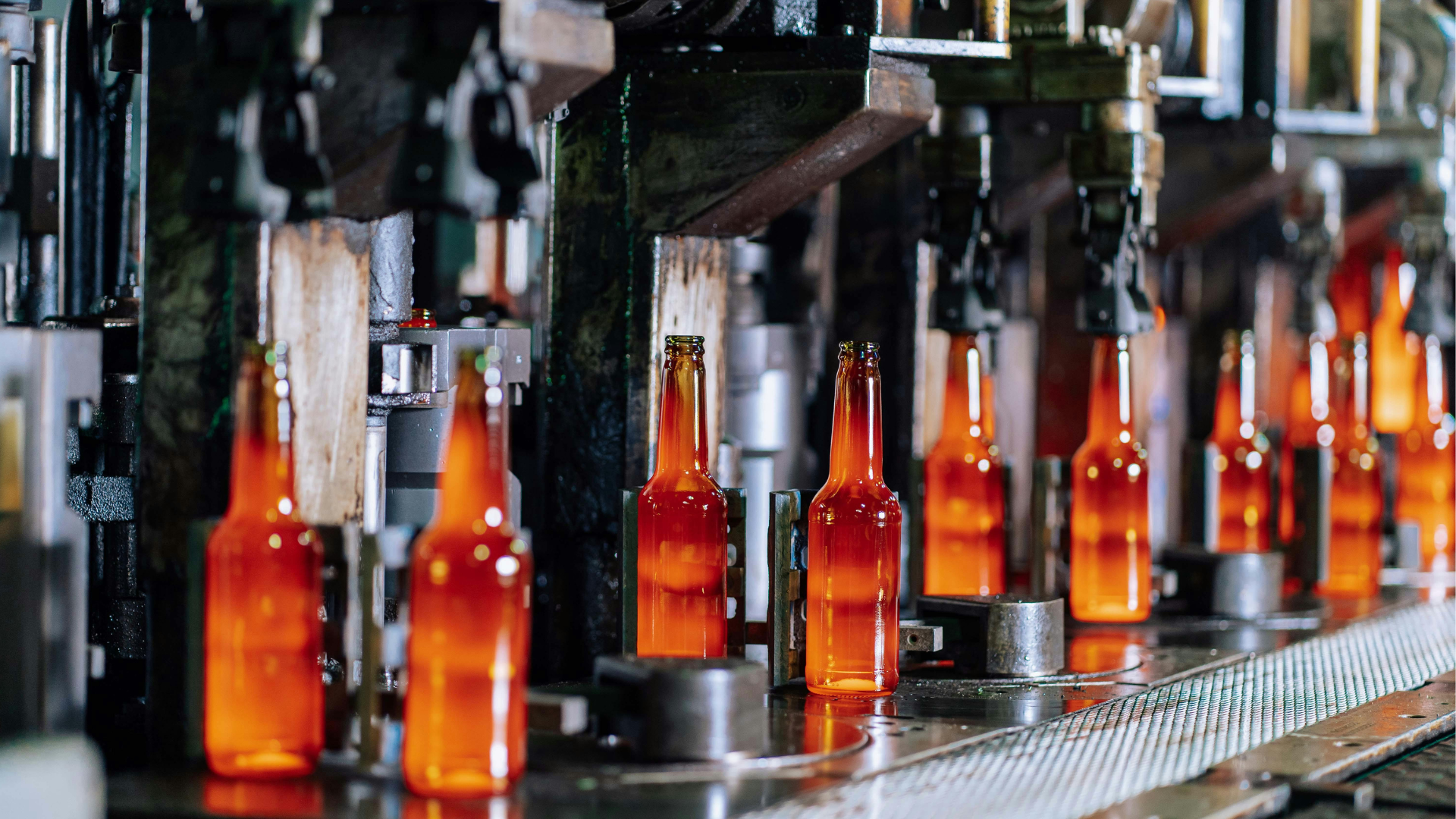
When you break down the stats and figures, though, producing aluminum from new requires almost double the amount of energy as glass. So, surely that means glass is more sustainable? Well, not really, because aluminum’s sustainability lies in its recyclability.
CO2 Emissions
In terms of environmental impacts, CO2 , or Carbon Dioxide as it is also known, plays a significant role in climate change.
Carbon dioxide in large volumes is harmful to the planet because it is a greenhouse gas. It’s referred to as such because it basically functions just like a greenhouse as it traps heat in the Earth’s atmosphere which can lead to global warming and climate change which results in a wide range of environmental impacts.
The more carbon emissions we produce, the more CO2 will be released into the atmosphere and the greater the damage to the environment will be. This is why being environmentally friendly and sustainable relies so heavily on reducing our carbon footprints.
While both glass and aluminum are much better for the environment than plastics, aluminum production produces far fewer carbon emissions than glass. In fact, globally, aluminum production produces around 14 – 16 tons of carbon per year compared with glass, which produces as much as 95 million tons!
Recycling aluminum also cuts this figure significantly, reducing it down to as little as 0.5 tons of CO2 for recycled aluminum. Again, this is why many refer to aluminum as the ‘miracle metal’.
Recyclability
Finally, we get to recycling, and it is here where aluminum packaging really shines.
Recycling is a vital aspect of sustainability. This is one of the primary reasons why single use plastics are deemed so harmful to the environment. As the name implies, they can be used only once and must then be discarded into the trash.
While some plastics can now be recycled, they can only be recycled a few times, and each time they not only lose their structural integrity, but the process also requires a lot of energy.
Both glass and aluminum packaging are more recyclable than plastic, but out of the two, aluminum comes out on top by a considerable margin. To begin with, aluminum is one of the few materials that can be recycled virtually indefinitely with no loss of quality. Glass however, can gradually lose its quality and structural integrity after having been recycled multiple times.
As far as energy savings are concerned, though, this is where aluminum really shines. Recycling glass will use as much as 50% less energy compared with making it from new. When you recycle aluminum, though, that number increases to 95%, meaning recycling aluminum requires 95% less energy than making it from new.
Aluminum is also one of the most widely recycled materials on the planet, with a global recycling rate of 76%. Compare this with glass, which is around 35% and it’s easy to understand why aluminum packaging is proving to be such a hit with companies trying to be more sustainable.